Why Anxiety Shows Up in Your Body

Updated: Sep 21

"Why Does My Body Feel Like Something Is Wrong?"
Your heart starts racing. Your chest feels tight. Your stomach suddenly feels unsettled. Maybe your hands get sweaty, your muscles tense up, or you feel like you can't take a deep enough breath.
And sometimes, you don't even know why.
When anxiety shows up physically, it can be confusing and even frightening. You may wonder if something is seriously wrong with you or why your body is reacting when your mind doesn't feel particularly anxious.
If you've experienced this, you're not imagining it.
Anxiety doesn't just happen in your thoughts, it can show up throughout your entire body.
Why Does This Happen?
Anxiety is connected to your body's stress response.
When your brain senses a threat, whether the threat is physical, emotional, or even something you're worried might happen, it can activate the fight-or-flight response.
Your heart may beat faster to move blood through your body. Your breathing may become quicker. Your muscles may tense.
You might also experience:
Headaches
Muscle tension
Shaking or trembling
Sweating
Dizziness
Fatigue
Stomach discomfort
Difficulty sleeping
The important thing to remember is that these sensations are real. They're not "just in your head."
Your thoughts, emotions, nervous system, and body are constantly communicating with one another.
Understanding that connection can make physical anxiety symptoms feel less mysterious and more manageable.
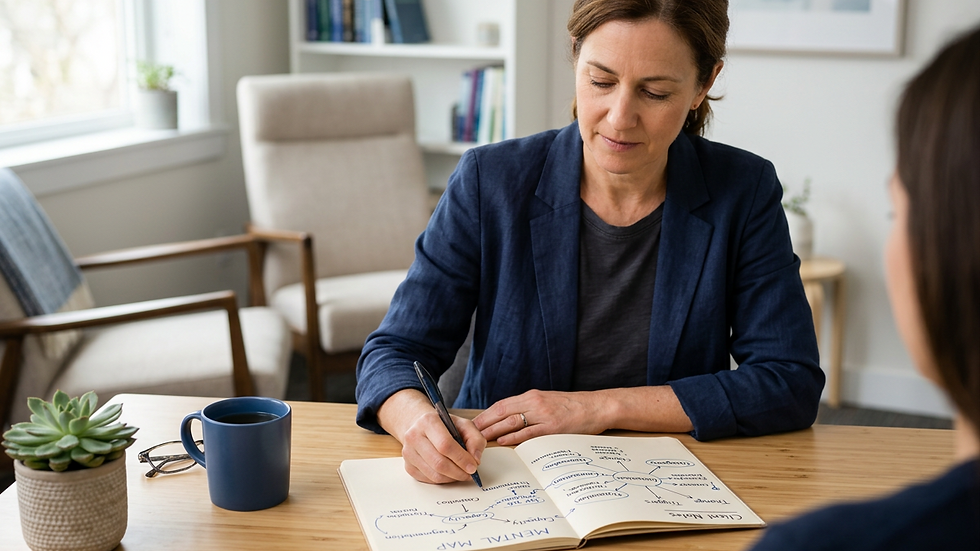
The Mental Map Method
Phase 0: Stabilization
Start by helping your body feel safer. When anxiety rises, try slowing down and noticing what's happening.
Ask yourself:
What am I feeling in my body?
Am I breathing quickly or holding my breath?
Do I need to slow down?
What would help me feel more grounded right now?
Simple grounding strategies, such as slow breathing, relaxing your shoulders, or placing your feet firmly on the floor, can help you reconnect with the present moment.
Phase 1: Awareness / Mapping
Start noticing your anxiety patterns.
Ask yourself:
Where do I usually feel anxiety in my body?
What situations tend to trigger these sensations?
What thoughts usually happen before my body reacts?
Do I become more anxious when I notice physical symptoms?
You may begin to notice patterns between certain situations, thoughts, emotions, and physical sensations.
Awareness helps you recognize the pattern before it becomes overwhelming.
Phase 2: Processing / Resolution
Instead of immediately interpreting physical sensations as something dangerous, practice approaching them with curiosity.
Instead of thinking: "Something is wrong with me."
Try asking: "Could my body be responding to stress or anxiety?"
You can remind yourself that anxiety can create very real physical sensations.
This doesn't mean ignoring symptoms or assuming every physical sensation is anxiety. New, severe, unusual, or concerning symptoms should be discussed with a healthcare professional.
The goal is to understand your body's signals without automatically becoming afraid of them.
Phase 3: Action / Agency
Build strategies that help you respond when anxiety appears.
Some examples include:
Take slow, comfortable breaths.
Relax areas where you're holding tension.
Step away from an overwhelming situation when possible.
Use grounding techniques to focus on your surroundings.
Write down anxious thoughts instead of repeatedly analyzing them.
Create calming routines that support your nervous system throughout the day.
The goal isn't to force anxiety to disappear.
It's to give yourself tools for responding to it differently.
Phase 4: Integration / Maintenance
Learning to recognize anxiety in your body is an ongoing process.
Over time, you may become better at noticing early signs of stress before they become overwhelming.
Ask yourself:
What helps my body feel calmer?
What situations tend to increase my stress?
Which strategies actually work for me?
What can I do regularly to support my overall well-being?
The goal isn't to never experience anxiety.
It's to develop a better understanding of your body's signals and feel more confident responding to them.
Practical Takeaways
Try one or two of these this week:
Do a Body Check-In
Pause for a moment and notice your body from head to toe.
Ask yourself where you're holding tension, whether your breathing has changed, and what emotions might be present.
Name the Sensation
Instead of immediately reacting to a physical symptom, describe it.
"My heart is beating quickly."
"My shoulders are tense."
"My stomach feels uncomfortable."
Putting words to the sensation can help create some distance between the physical feeling and the fear surrounding it.
Practice Grounding Before You Need It
Choose one grounding technique and practice it when you're already calm.
That way, the strategy feels familiar when anxiety appears.
Your Body Is Trying to Communicate
If anxiety or physical symptoms are interfering with your daily life, working with a therapist can help you better understand the connection between your thoughts, emotions, nervous system, and body. You don't have to navigate it alone.
If you'd like support applying the Mental Map Method to your own situation, schedule a free consultation today to get clear on what's keeping you stuck and how to move forward step by step


Comments