Why You Compare Yourself to Others and Why It Fuels Anxiety

Updated: Sep 21

You check social media or hear about someone’s success, and your mind starts racing. “I should be further ahead.” “Why am I behind?” That moment can turn into hours of anxiety.
Problem Explanation
Comparison is one of the fastest ways to trigger anxiety.
Your brain tries to gauge where you stand but lacks complete information. You compare your real life—messy, incomplete, and behind-the-scenes—to someone else’s curated results.
This creates a constant sense of pressure:
* You feel behind, even when you’re doing fine
* You question your decisions
* You struggle to relax because it feels like you should be doing more
Over time, this pattern keeps your nervous system in a state of stress. The more you compare, the more anxious you feel and the harder it is to think clearly.
The goal isn’t to eliminate comparison. It’s to stop it from controlling your thoughts and anxiety levels.
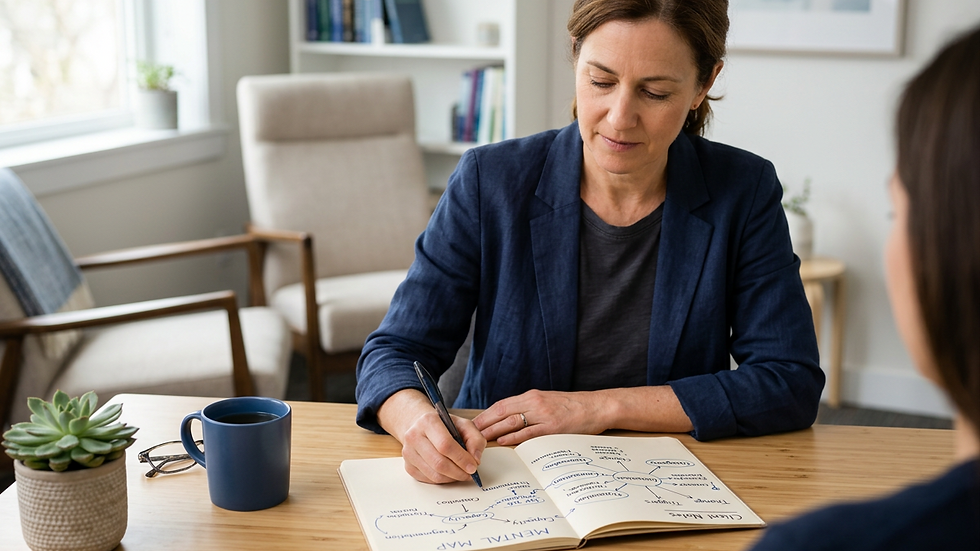
The Mental Map Method (MMM)
This method helps you interrupt anxious comparison and regain control.
Phase 0: Stabilization
Anxiety comes first, logic comes later.
When comparison hits, your body reacts immediately. You might feel tense, restless, or overwhelmed.
Start here:
* Slow your breathing
* Pause what you’re doing
* Step away from the trigger if possible
You’re not solving the problem yet; you’re calming the reaction.
Phase 1: Awareness
Catch the comparison in real time.
Ask:
* Who am I comparing myself to?
* What am I focusing on (career, money, relationships)?
* What thoughts are coming up?
This step helps separate you from the spiral.
Phase 2: Processing
Look at what the anxiety is pointing to.
Comparison often connects to:
* Fear of falling behind
* Pressure to meet certain timelines
* Doubts about your worth or progress
Instead of fighting the feeling, be specific. What exactly feels “not enough” right now?
Phase 3: Action
Turn anxiety into a clear next step.
You don’t need to fix everything; just move forward slightly:
* Define one realistic action for today or this week
* Reduce exposure to triggers that spike anxiety
* Refocus on your own priorities instead of someone else’s
Action reduces anxiety by giving your brain direction.
Phase 4: Integration
Train your mind to respond differently over time.
Build habits that lower comparison-driven anxiety:
* Track your own progress weekly
* Set personal benchmarks instead of copying others
* Remind yourself that timelines are not universal
This phase helps comparison lose its intensity.
Practical Tools for Anxiety and Comparison
1. The “Pause and Name It” Tool
When anxiety spikes, say: “This is comparison.”
Labeling it creates distance and reduces emotional intensity.
2. The 24-Hour Refocus Rule
Instead of reacting immediately, wait 24 hours before making decisions based on comparison. This prevents anxious, impulsive choices.
3. Your Personal Progress List
Write down 3 things you’ve improved or handled well each week.
This shifts your focus from others back to your own growth.
Ready to change this pattern?
If comparison drives your anxiety, it may be time to address the pattern directly. Therapy can help you understand triggers, reduce anxious thinking, and build a more stable sense of progress. Support is available when you’re ready. Schedule a free consultation today.


Comments